Introduction
Beards are more than just facial hair — they’re a statement of style, personality, and masculinity. But behind every great beard lies a simple truth: what you apply to it matters.
The problem is, many men don’t actually know what’s inside their beard oil. Some products promise “premium” results but are secretly filled with synthetic oils and artificial fragrances that do more harm than good.
If you’ve ever wondered why your beard feels greasy, irritated, or unnaturally shiny after using certain oils, the answer might lie in the ingredients. In this article, we’ll break down synthetic vs organic beard oils, explain how to spot the difference, and show you why Daari chooses only the purest natural oils for your beard. Understanding the differences between synthetic vs organic beard oils is crucial for maintaining a healthy and stylish beard.
What Are Essential Oils and Carrier Oils?
When it comes to beard care, two types of oils play the leading role: carrier oils and essential oils.
- Carrier oils are the foundation. Examples include jojoba oil, argan oil, almond oil, and coconut oil. These oils are extracted from nuts, seeds, or plants and provide deep hydration, vitamins, and fatty acids that nourish both your beard and the skin underneath. They are light, non-sticky, and mimic the natural sebum your skin produces.
- Essential oils are concentrated plant extracts such as tea tree, peppermint, cedarwood, and lavender. These are typically steam-distilled or cold-pressed and used in small amounts for fragrance and therapeutic benefits like reducing dandruff, soothing irritation, or stimulating hair growth.
Together, carrier oils and essential oils create a 100% natural beard oil that feels light, absorbs easily, and actually improves beard health over time.
What Are Synthetic Oils?
On the other side of the spectrum, we have synthetic oils, also known as fragrance oils.
Synthetic oils are artificially manufactured in labs using petroleum by-products, mineral oils, or alcohols. They are cheap to make, widely available, and can be engineered to mimic almost any fragrance imaginable.
Why brands use synthetic oils:
- Cost-effective: Much cheaper than sourcing real essential oils.
- Easy availability: Mass-produced in bulk without dependence on crops or harvests.
- Fragrance flexibility: Unlimited artificial scents can be created.
But here’s the downside:
- Skin irritation: Synthetic oils can trigger allergies, rashes, and itchiness.
- Blocked pores: Mineral oil and petroleum derivatives form a greasy film that clogs pores instead of nourishing them.
- Artificial feel: The scent is overpowering, perfume-like, and unnatural.
- Poor long-term results: Instead of healthier growth, users are left with dryness, breakage, and dissatisfaction.
So while synthetic oils look appealing to brands cutting costs, they leave men with subpar — and sometimes harmful — results.
How to Spot Synthetic Oils in Beard Products
Not sure if your beard oil contains synthetic oils? Here are some practical tips:
1. Check the Label
- Look out for complicated chemical names like parfum, fragrance, petrolatum, mineral oil, isopropyl alcohol.
- True carrier and essential oils have simple, plant-based names (argan oil, jojoba oil, peppermint oil, etc.).
2. Check the Texture
- Synthetic oils often leave a thick, greasy layer on your beard.
- Natural oils absorb quickly and feel light.
3. Check the Smell
- Synthetic oils smell too strong, perfume-like, almost chemical.
- Natural essential oils have a milder, earthy, authentic scent.
4. Check After Use
- If your beard feels sticky, unnaturally glossy, or greasy even after washing, you’re likely using a synthetic oil.
📌 Pro Tip: A quick rule of thumb — if it feels like perfume, it’s not real beard oil.
The Problem with Local Brands
Now let’s talk about the local beard oil scene.
Many local brands claim to use “natural” oils but actually use synthetic fragrance oils or extremely cheap-quality essential oils. Here’s why:
- Limited production: In Bangladesh, we can’t produce most essential oils at scale. Only a few like agarwood oil (produced in Sylhet and Chattogram) are of genuinely good quality.
- Lack of expertise and equipment: Proper extraction methods, purity checks, and testing (like GC-MS testing) are missing.
- Adulteration: Oils are often diluted with fillers to cut costs.
- No certifications: Without proper international standards, many products labeled as “pure” are far from it.
The result? Men end up buying beard oils that are either ineffective or damaging — all while thinking they’re using something natural.
Why Organic & Natural Oils Are Better
Switching to organic and natural oils isn’t just about luxury — it’s about real beard health.
Benefits of organic beard oils:
- Skin-friendly: Reduces irritation and nourishes skin underneath the beard.
- Better absorption: Doesn’t clog pores, works in harmony with natural sebum.
- Healthy growth: Strengthens follicles, prevents breakage, and supports natural growth.
- Natural fragrance: Smells fresh and earthy, not overpowering.
- Sustainable: Environmentally safer and ethically sourced.
Science backs this up — natural oils contain fatty acids, antioxidants, and vitamins that synthetic oils simply can’t replicate.
Synthetic vs. Organic Oils: A Quick Comparison
| Feature | Synthetic Oils | Organic/Natural Oils |
|---|---|---|
| Source | Lab-made (petroleum, alcohol) | Plants, seeds, nuts, herbs |
| Cost | Cheap | Higher (due to sourcing & testing) |
| Texture | Greasy, heavy | Light, easily absorbed |
| Smell | Strong, perfume-like | Mild, natural, earthy |
| Skin Effects | Irritation, clogged pores | Nourishing, soothing, safe |
| Long-term Beard Health | Poor, leads to breakage | Stronger, healthier beard |
Daari’s Commitment to Organic Purity
At Daari, we built our brand to solve this exact problem in Bangladesh.
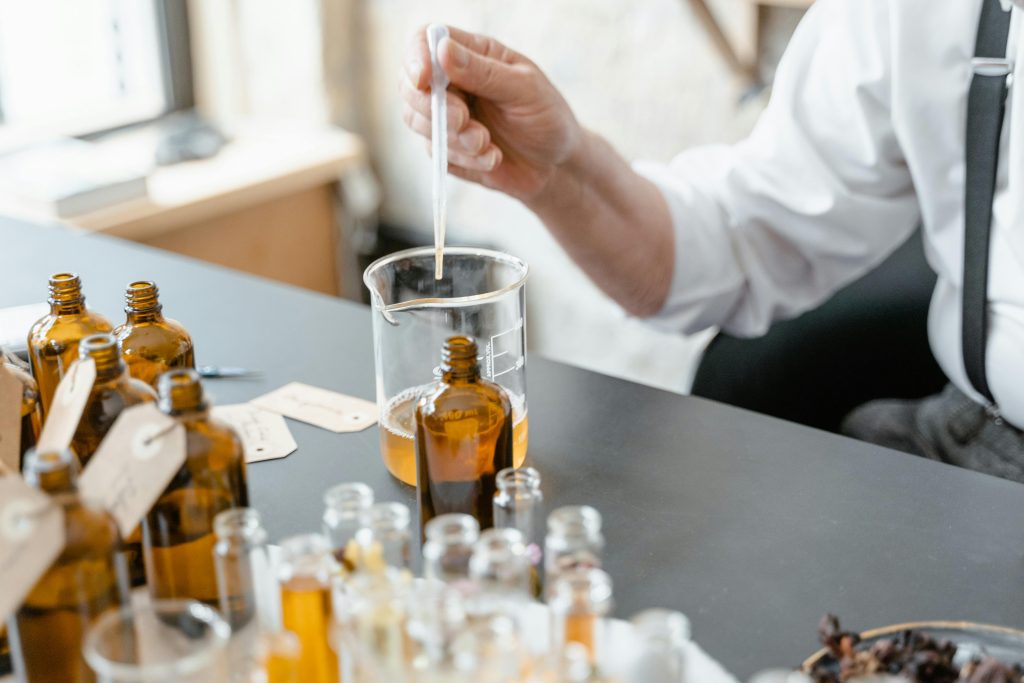
- We use 99% pure carrier and essential oils.
- Every batch is GC-MS tested, ensuring purity and authenticity.
- All oils carry organic certification, ISO certification, and IFRA compliance.
- Our beard oils are non-sticky, lightweight, naturally scented, and easily absorbable.
- Since most high-quality essential oils cannot be produced locally, we source them from internationally certified manufacturers and suppliers.
Yes, this makes our products more expensive than average local brands — but that’s because we never compromise on quality. When you apply Daari beard oil, you know exactly what you’re putting on your skin and beard: pure, premium, and natural care.
Consumer Guide: How to Choose the Right Beard Oil
Here’s a quick checklist for men who want to make the right choice:
- Read the label: Look for simple oil names (jojoba, argan, peppermint). Avoid “fragrance” or “parfum.”
- Test absorption: A good beard oil absorbs quickly without feeling greasy.
- Smell test: If it smells like a cologne or perfume, it’s synthetic.
- Research the brand: Look for certifications and transparent sourcing.
- Price check: If it’s too cheap to be true, it probably is.
Conclusion
The truth is simple: synthetic beard oils are cheap imitations that damage more than they help. Organic and natural beard oils, on the other hand, nourish, strengthen, and keep your beard healthy in the long run.
In Bangladesh, where many local brands cut corners with synthetic or poor-quality oils, Daari stands out as the country’s premium beard care brand — using only internationally certified, tested, and organic ingredients.
Your beard deserves better than shortcuts. Choose purity. Choose confidence. Choose the best beard oil in the world.
FAQs About Beard Oils
1. Can synthetic oils ever be safe?
Some cosmetic-grade synthetics are safe for external use, but they lack the nourishing benefits of natural oils.
2. Why are organic oils more expensive?
Because they require farming, extraction, testing, and certification — but they’re worth it for your health.
3. How do I know if my beard oil is fake?
Check the label, texture, and smell. If it feels greasy and smells like perfume, it’s synthetic.